【ラジオ英会話】Lesson 103 文修飾② – 付帯状況 – September 4 Wednesday, 2024
September 4 Wednesday, 2024
Lesson 103 文修飾② – 付帯状況
★Opening
D: And I’m David Evans. I think that’s one puzzle we may never solve.
☆Words & Phrases
**solve:
Can you solve it?
**figure ~ out:
It’s so hard. I haven’t figured it out yet.
Here, give it to me.
Whoa, whoa, slow down, you’re going too fast.
**voilà:
…And voilà! Here you go, Renji. Solved.
I’ll show you after today’s math lesson.
☆Grammar and Vocabulary
Have you seen one of these puzzles before?
現在完了形(経験: ~したことがある)
現在完了形のイメージは「(今に)迫ってくる」で、過去の出来事を現在の経験として「引きつける」ことが、経験の使い方につながっている。
ここでは before(前に・以前)が加わり、典型的な経験を述べる言い回しとなっている。
No way!
No way!
「ありえない・絶対だめだ」など、可能性の強い否定。日常頻用される決まり文句。
このような決まり文句は、日本語と同じく英語にもたくさんあり、私たち学習者はあらゆ る機会を通じて覚えなければならない。
自分が知らない・使えないフレーズを見つけたら、すぐに音読・暗唱で身につけること!
☆Target Forms
I can do it with my eyes closed.
この with は「付帯状況の with」と呼ばれる
with(一緒)が「同時性」を表し、ある状況に付帯する状況を述べているため。
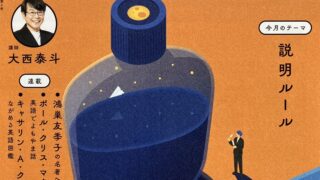
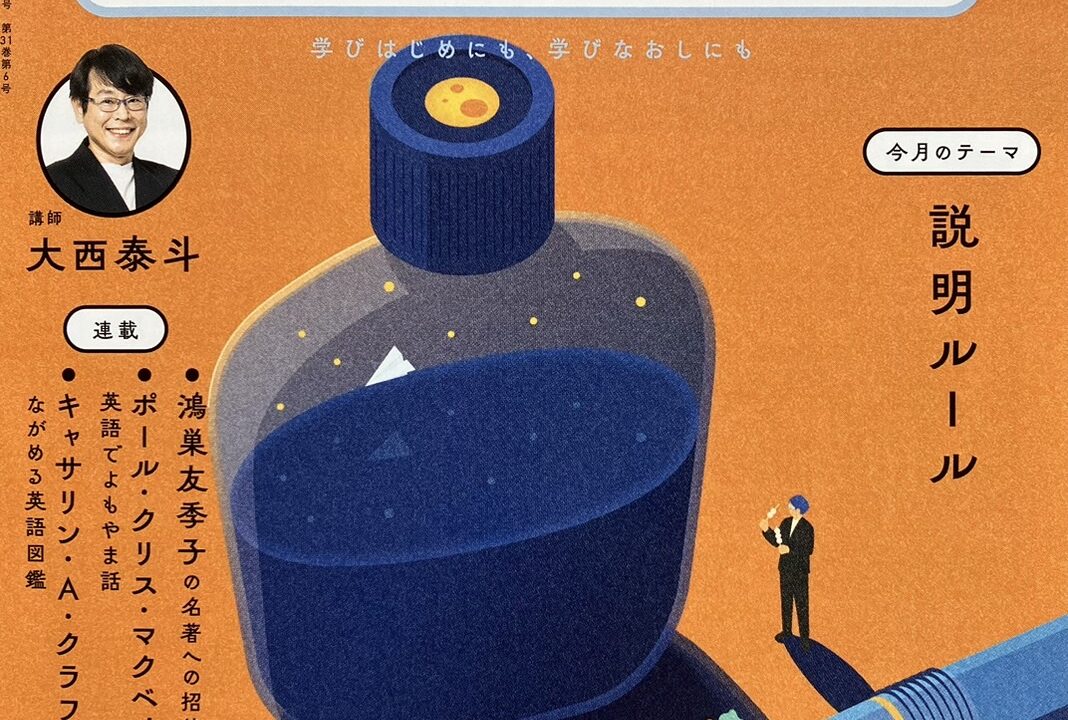
この文では、I can do it に with my eyes closed(目をつぶりながら)が付帯している。「説明ルール: 説明は後ろに置く」より、with 以下は当然後ろに置かれる。
この形で特筆すべきは with の後ろ。動詞はないが、my eyes と過去分詞 closed(閉じられた)が並べられており「私の目が閉じられて(いても)」と、文と等しい内容を持っている。ここでも説明ルールが働いており「my eyes = closed」という意味を作っているのである。
Practice
「説明は後ろに置く」ポイントはだたそれだけ。この形は説明ルールがダブルで使われ、説明ルールの練習に最適です。説明の意識で with my eyes closed を並べます。with の後ろも my eyes と closed が説明ルールに従って並んでいますよ。
I can do it
↓
I can do it with my eyes closed.
① She sat with her cat next to her.
→ She sat に付帯する状況を with 以下で説明
② We did the work with one person missing.
→ We did the work を with 以下で説明
③ Don’t leave your desk with your computer unlocked.
→「your computer = unlocked」の関係を意識して
★Practice
D: All right everyone. Let’s continue with our theme of additional information comes after. “I can do it” だけじゃないよ “with my eyes closed”, put it after. Okay? Let’s go.
R: Repeat after us,
– She sat, She sat
– She sat with her cat next to her.
D: Great work. Let’s keep going,
– We did the work, We did the work
– We did the work with one person missing.
R: And one more,
– Don’t leave your desk, Don’t leave your desk
– Don’t leave your desk with your computer unlocked.
D: Unlock your potential.
R: Repetition is the key!
D&R: Great work.
☆Grammar in Action
①あなたが私を見ていたら集中できません。放っておいてくれませんか?
**give ~ some space:
②彼は、いつも脚を組んで座っています。もしかすると、彼はそれがより心地よいのかもしれません。
**cross:
**that way:
③腕にギプスをしてタイプすることができますか?もしかすると、私たちはあなたに別の課題を見つけるべきかもしれません。
**in a cast:
★Ending
O: Humm… I’ve broken my arm before and it was so hurt to write.
D: I’ve had the same thing happen. I had to learn to write with my left hand.
R: How did you break your arm, sensei?
O: I just fell off an iron bar.
D: Oh, on a playground?
**iron bar:
September 4 Wednesday, 2024
Lesson 103 文修飾② – 付帯状況
(日本語訳・解説付き)
★Opening
D: And I’m David Evans. I think that’s one puzzle we may never solve.
☆Words & Phrases
**solve:(謎・問題などを)解く、解決する
Can you solve it?
解くことができますか?
**figure ~ out: 〜を理解する、(問題を)解決する
It’s so hard. I haven’t figured it out yet.
すごく難しいんですよ。僕はまだ解き方がわかりません。
※solve と figure ~ out はどちらも「解決する」ですが、違いは何でしょう?
solve は、論理的で明確な答えが必要な場合に使われます。例:数学の問題、ビジネス上の課題、明確な解決策がある状況
figure ~ out は、少し時間をかけて考え、手探りで解決策を見つける場合に使われます。例:日常的な問題、どうすればいいのかをゆっくり考える状況
Here, give it to me.
さあ、私に貸してちょうだい。
Whoa, whoa, slow down, you’re going too fast.
ちょっと、ちょっと、ゆっくりやってもらえますか、速すぎます。
※you’re going だけだと「あなたは行っている」ですが、too fast が後ろについて「あなたは速すぎる」となります!
**voilà: [フランス語] はい出来上がり、ほら見て、ジャジャーン
…And voilà! Here you go, Renji. Solved.
…ほら、出来上がり!さあ、どうぞ、レンジ。完成よ。
I’ll show you after today’s math lesson.
教えてあげるわ、今日の数学の勉強の後ならね。
※after が強調されて読まれていました!
☆Grammar and Vocabulary
Have you seen one of these puzzles before?
あなたは、以前これらのパズルのひとつを見たことがありますか?
現在完了形(経験: ~したことがある)
現在完了形のイメージは「(今に)迫ってくる」で、過去の出来事を現在の経験として「引きつける」ことが、経験の使い方につながっている。
ここでは before(前に・以前)が加わり、典型的な経験を述べる言い回しとなっている。
No way!
まさか!
No way!
「ありえない・絶対だめだ」など、可能性の強い否定。日常頻用される決まり文句。
このような決まり文句は、日本語と同じく英語にもたくさんあり、私たち学習者はあらゆ る機会を通じて覚えなければならない。
自分が知らない・使えないフレーズを見つけたら、すぐに音読・暗唱で身につけること!
☆Target Forms
I can do it with my eyes closed.
私は、目をつぶっていてもそれができます。
この with は「付帯状況の with」と呼ばれる
with(一緒)が「同時性」を表し、ある状況に付帯する状況を述べているため。
この文では、I can do it に with my eyes closed(目をつぶりながら)が付帯している。「説明ルール: 説明は後ろに置く」より、with 以下は当然後ろに置かれる。
この形で特筆すべきは with の後ろ。動詞はないが、my eyes と過去分詞 closed(閉じられた)が並べられており「私の目が閉じられて(いても)」と、文と等しい内容を持っている。ここでも説明ルールが働いており「my eyes = closed」という意味を作っているのである。
Practice
「説明は後ろに置く」ポイントはだたそれだけ。この形は説明ルールがダブルで使われ、説明ルールの練習に最適です。説明の意識で with my eyes closed を並べます。with の後ろも my eyes と closed が説明ルールに従って並んでいますよ。
I can do it
↓
I can do it with my eyes closed.
① She sat with her cat next to her.
彼女は、ネコを隣に置いて座っていました。
→ She sat に付帯する状況を with 以下で説明
② We did the work with one person missing.
私たちは、ひとり欠けた状態で仕事をしました。
→ We did the work を with 以下で説明
③ Don’t leave your desk with your computer unlocked.
あなたのパソコンをロックしない状態で席を離れないで。
→「your computer = unlocked」の関係を意識して
★Practice
D: All right everyone. Let’s continue with our theme of additional information comes after. “I can do it” だけじゃないよ “with my eyes closed”, put it after. Okay? Let’s go.
R: Repeat after us,
– She sat, She sat
– She sat with her cat next to her.
D: Great work. Let’s keep going,
– We did the work, We did the work
– We did the work with one person missing.
R: And one more,
– Don’t leave your desk, Don’t leave your desk
– Don’t leave your desk with your computer unlocked.
D: Unlock your potential.
R: Repetition is the key!
D&R: Great work.
☆Grammar in Action
①あなたが私を見ていたら集中できません。放っておいてくれませんか?
I can’t focus with you looking at me. Could you give me some space?
**give ~ some space: ~に(くつろぐ)スペース・空間をちょっと与える → ~をそっとしておく
②彼は、いつも脚を組んで座っています。もしかすると、彼はそれがより心地よいのかもしれません。
He always sits with his legs crossed. Maybe he’s more comfortable that way.
**cross: 交差させる・(手や脚を)組む
**that way: そんなふうに、その方が
③腕にギプスをしてタイプすることができますか?もしかすると、私たちはあなたに別の課題を見つけるべきかもしれません。
Can you type with your arm in a cast? Maybe we should find other tasks for you.
**in a cast: ギプス [石こう包]をして
★Ending
O: Humm… I’ve broken my arm before and it was so hurt to write.
以前に腕を骨折して、何かを書くときすごく痛かったんだよね。
D: I’ve had the same thing happen. I had to learn to write with my left hand.
私も同じ経験ある。左手で書くことを覚えなきゃいけなかったよ。
R: How did you break your arm, sensei?
先生、どうやって腕を折ったんですか?
O: I just fell off an iron bar.
ただ鉄棒から落ちただけ。
D: Oh, on a playground?
ああ、公園で?
**iron bar: 鉄棒