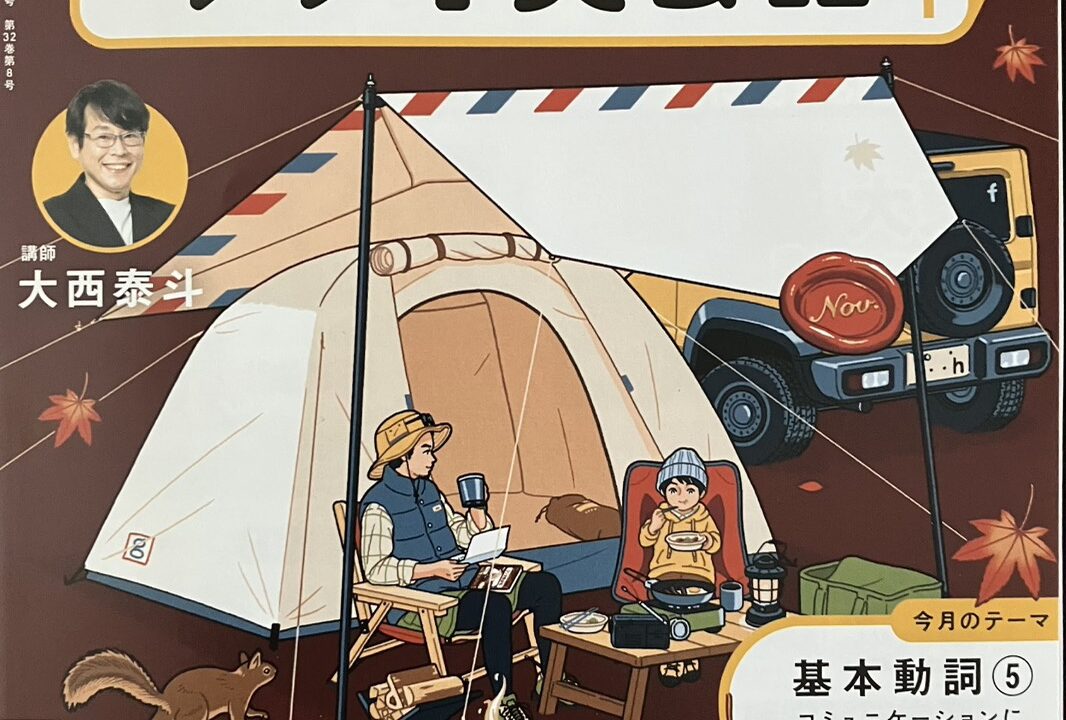
【ラジオ英会話】Lesson 148 情報を与える動詞① – teach, instruct – November 12 Wednesday, 2025
November 12 Wednesday, 2025
Lesson 148 情報を与える動詞① – teach, instruct
☆Words & Phrases
**take a break:
I like this library, Miho. You can take a break from studying and eat outside.
**maple:
Yeah, I like it too. Look, the maple leaves are turning red. They’re really pretty. What are you studying today, Ethan?
**throw ~ away:
**garbage:
OK, snack time’s over. Where should I throw away my garbage?
**trash can:
The staff instructed us to take all our garbage home ourselves. We can’t use the trash cans in the restrooms, either.
Right. OK then, garbage. Back into my bag you go.
☆Grammar and Vocabulary
either のイメージ
We can’t use the trash cans in the restrooms, either.
either は否定文で使われる「〜もまた」
この単語を理解するには、まず両手を前に出して、そして右手を見て、それから左手を見る
二者を片方ずつ眺めるこの感覚が either
否定的な内容について「こちらもダメ」という感覚
ちなみにこの文で too は 使うことができないことに注意
OK then.
OK then.
OK then. は「よし、それなら」
then のイメージ 「視線を移す」が色濃く感じられる
相手の意見をOKで受け「それなら」と次の行為に移している
↓当ジムのコースと料金↓

☆Grasp the Concept
Aoi has taught me a lot about the Edo period.
teach は「教える」と訳されるが「ある程度複雑な内容を、時間をかけて教える」こと
「駅までの道を教えてください」や「住所を教え てください」といった場面で使うことはできない
駅までの道を教えてください。
→
住所を教えてください。
→
英単語は、訳語としばしば守備範囲が異なることに注意が必要
①授与型(SVOO)
She taught us French.
teach は teach English のような他動型(SVO)だけではなく、授与型(SVOO)で使うこともできる
この型は「~に…をあげる・くれる」を表す型
この文は「私たちに・フランス語を・教えてくれました」
② to不定詞を用いた目的語説明型(SVOC)
He taught me to swim.
teach は「to不定詞」を用いた目的語説明型(SVOC)にも使われる
to は矢印 (→)。swim するのを教えたということ
He taught me how to swim.
とすると「泳ぐ方法」をステップ・バイ・ステップで教える感じ
③無生物主語
Failing the exam taught me a lesson.
teach には無生物主語もよく使われる
ここでは「試験に落ちることが」という主語で
④instruct
The staff instructed us to take all our garbage home ourselves.
instruct も、相手に情報を与えることを示す基本動詞
「あれをしなさい・これをしないように」といった「指示を与え」る
driving instructor (教習所の指導員) が教えている様子を想像するとよい
☆Practical Usage
・teach me how to ~
・teach me to ~
「子どものころ、父が自転車の乗り方を教えてくれました。何度も転 びましたが、いつも立ち上がるように教えてくれました。それが私が学んだいちばん大切な教えだったと思います。
☆Pronunciation Polish
R: All right guys. Let’s get into our pronunciation practice. Today’s sentence is,
Aoi has taught me a lot about the Edo period.
This sentence is a little bit long and we have a lot of points to cover. But they’re all things you’ve already practiced before. So, just focus on repeating the sound that you hear. Repeat after me,
– Aoi has taugh(t)me
– a lotabout
– the Edo period
– a lotabout the Edo period
All right. Are you ready for the full sentence?
– Aoi has taugh(t)me a lotabout the Edo period.
All right. How did you do? It might be difficult at first, but keep on practicing and you’ll get it.
★Ending
O: Hey guys. What’s the first thing you usually do when you buy a book?
D: After I buy the book?
O: Oh, yeah.
D: I don’t know. Read it? Is there something special I should be doing after buying a book?
R: Well, if it’s an old book, I smell the book. And then, I just put it on shelf and usually never touch it again.
D: What about you, sensei?
O: Yeah, open it, smell it.
November 12 Wednesday, 2025
Lesson 148 情報を与える動詞① – teach, instruct
(日本語訳・解説付き)
☆Words & Phrases
**take a break: 休憩する
I like this library, Miho. You can take a break from studying and eat outside.
ミホ、僕は、この図書館を気に入ったよ。勉強にひと息入れて、外でものが食べられるからね。
**maple: もみじ
Yeah, I like it too. Look, the maple leaves are turning red. They’re really pretty. What are you studying today, Ethan?
ええ、私も気に入ってる。見て、もみじの葉が赤くなってきた。とてもきれいね。イーサン、今日は何の勉強をしているの?
※turn red の turn は「変化」です
**throw ~ away: (ゴミなどを) 捨てる
**garbage: (生) ゴミ、くず
OK, snack time’s over. Where should I throw away my garbage?
さて、おやつの時間はおしまいだ。ゴミはどこに捨てたらいいのかな?
**trash can: ゴミ箱
The staff instructed us to take all our garbage home ourselves. We can’t use the trash cans in the restrooms, either.
ここの職員は、ゴミはすべて自分たちで持ち帰るようにと指示していたよ。洗面所にあるゴミ箱も使ってはいけないの。
Right. OK then, garbage. Back into my bag you go.
なるほど。それなら、さぁゴミくん。君は僕のバッグの中に入るんだ。
※Back into my bag you go. は「倒置」です。
You go back into my bag.
が普通の語順ですね!
☆Grammar and Vocabulary
either のイメージ
We can’t use the trash cans in the restrooms, either.
私たちは洗面所のゴミ箱も使うことはできません。
either は否定文で使われる「〜もまた」
この単語を理解するには、まず両手を前に出して、そして右手を見て、それから左手を見る
二者を片方ずつ眺めるこの感覚が either
否定的な内容について「こちらもダメ」という感覚
ちなみにこの文で too は 使うことができないことに注意
OK then.
OK then.
よし、それなら。
OK then. は「よし、それなら」
then のイメージ 「視線を移す」が色濃く感じられる
相手の意見をOKで受け「それなら」と次の行為に移している
↓当ジムのコースと料金↓
☆Grasp the Concept
Aoi has taught me a lot about the Edo period.
アオイさんは、江戸時代についていろいろなことを私に教えてくれました。
teach は「教える」と訳されるが「ある程度複雑な内容を、時間をかけて教える」こと
「駅までの道を教えてください」や「住所を教え てください」といった場面で使うことはできない
駅までの道を教えてください。
Could you please show [tell] me the way to the station?
住所を教えてください。
Let me know your address.
などとなる
英単語は、訳語としばしば守備範囲が異なることに注意が必要
①授与型(SVOO)
She taught us French.
彼女は私たちにフランス語を教えてくれました。
teach は teach English のような他動型(SVO)だけではなく、授与型(SVOO)で使うこともできる
この型は「~に…をあげる・くれる」を表す型
この文は「私たちに・フランス語を・教えてくれました」
② to不定詞を用いた目的語説明型(SVOC)
He taught me to swim.
彼は私に泳ぎを教えました。
teach は「to不定詞」を用いた目的語説明型(SVOC)にも使われる
to は矢印 (→)。swim するのを教えたということ
He taught me how to swim.
とすると「泳ぐ方法」をステップ・バイ・ステップで教える感じ
③無生物主語
Failing the exam taught me a lesson.
試験に落ちていい教訓になりました。
teach には無生物主語もよく使われる
ここでは「試験に落ちることが」という主語で
④instruct
The staff instructed us to take all our garbage home ourselves.
職員は、ゴミはすべて自分たちで持ち帰るよ うにと指示しました。
instruct も、相手に情報を与えることを示す基本動詞
「あれをしなさい・これをしないように」といった「指示を与え」る
driving instructor (教習所の指導員) が教えている様子を想像するとよい
☆Practical Usage
・teach me how to ~
・teach me to ~
「子どものころ、父が自転車の乗り方を教えてくれました。何度も転 びましたが、いつも立ち上がるように教えてくれました。それが私が学んだいちばん大切な教えだったと思います。
【解答例】
When I was a kid, my father taught me how to ride a bike. I fell off a lot, but he taught me to always get back up. I think that was the most valuable thing I learned ( ).
・fall off は「落ちる・転ぶ」
・get back up は、転んだあと「再び立ち上がる」。比喩的に「失敗してもあきらめず立ち直る」ことまで視野に入るフレー
・the most valuable thing I learned は関係代名詞節修飾。learned の後ろの空所 ( ) と the most valuable thing が組み合わされて「私が学んだ最も貴重なこと」
☆Pronunciation Polish
R: All right guys. Let’s get into our pronunciation practice. Today’s sentence is,
Aoi has taught me a lot about the Edo period.
This sentence is a little bit long and we have a lot of points to cover. But they’re all things you’ve already practiced before. So, just focus on repeating the sound that you hear. Repeat after me,
– Aoi has taugh(t)me
– a lotabout
– the Edo period
– a lotabout the Edo period
All right. Are you ready for the full sentence?
– Aoi has taugh(t)me a lotabout the Edo period.
All right. How did you do? It might be difficult at first, but keep on practicing and you’ll get it.
★Ending
O: Hey guys. What’s the first thing you usually do when you buy a book?
ねえ、みんな。本を買ったらまず何をする?
D: After I buy the book?
本を買った後に?
O: Oh, yeah.
そう。
D: I don’t know. Read it? Is there something special I should be doing after buying a book?
さあ…読む?買った後に何か特別にやることってあるの?
R: Well, if it’s an old book, I smell the book. And then, I just put it on shelf and usually never touch it again.
古本だったら、まず匂いをかぐかな。で、そのあと棚に置いて、たいてい二度と触らない。
D: What about you, sensei?
先生は?
O: Yeah, open it, smell it.
うん、開いて、匂いをかぐね。
★LINE公式のお友だち登録はこちら
毎週『ラジオ英会話』を深堀した、使える英語情報を発信しています♪